The Art of the Oiran Hairstyle: A Window into Edo Period Elegance
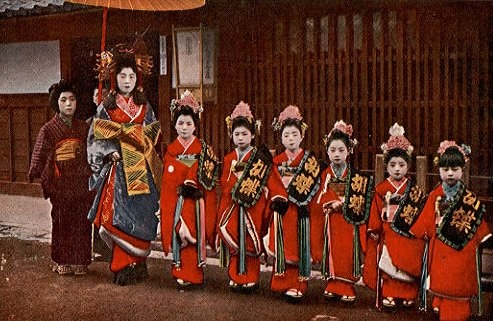
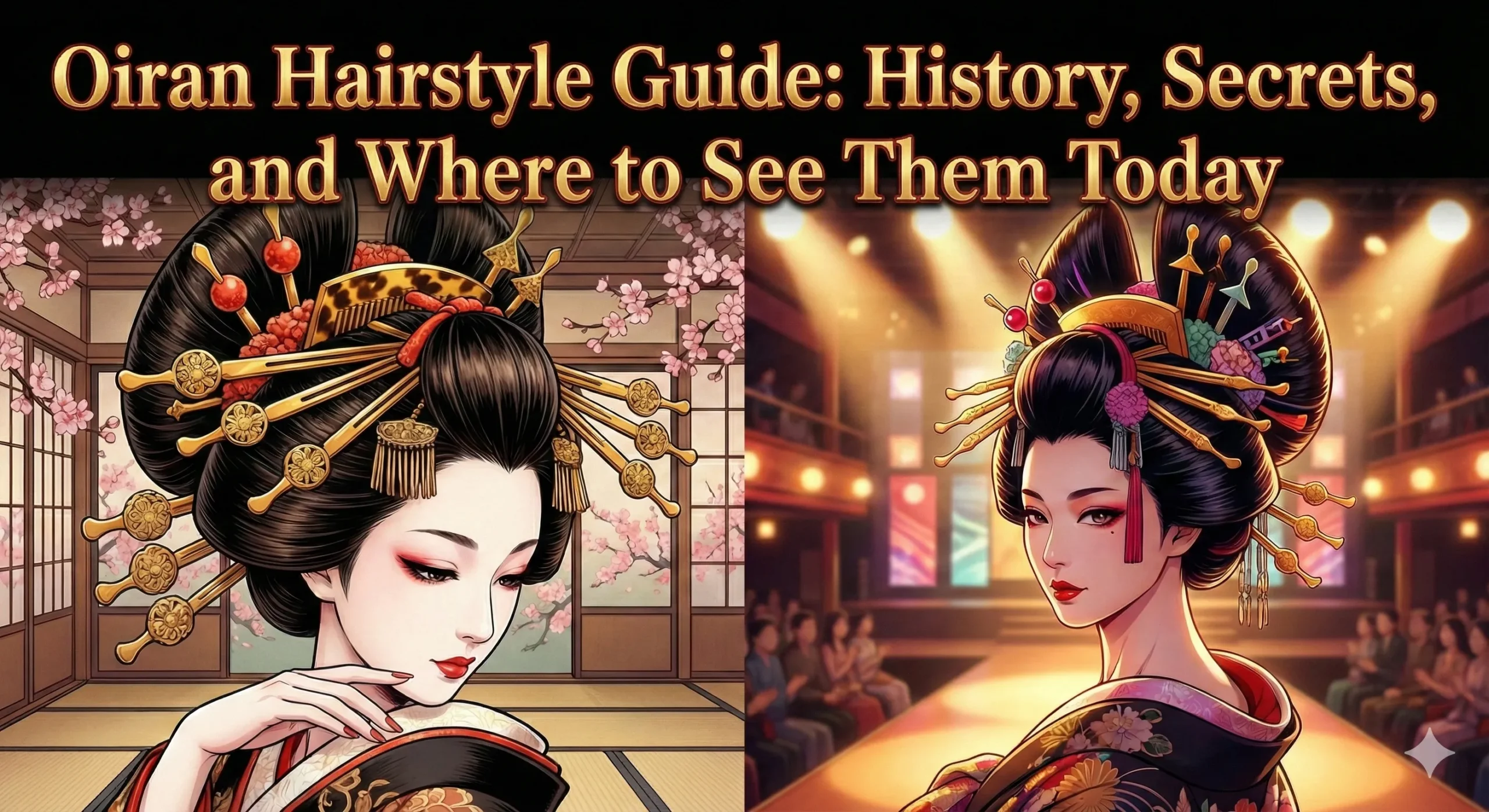
When you think of traditional Japan, the image of a woman in an elaborate kimono with a towering, ornate hairstyle often comes to mind. This is the oiran, the high-ranking courtesan of the Edo period. Among all the elements of her appearance, the oiran hairstyle is perhaps the most striking. Known for its complexity and the sheer volume of gold and tortoiseshell accessories, these hairstyles were a display of status, artistry, and the cultural height of the pleasure quarters.
In this article, we will deconstruct the structure of these iconic hairdos, explore the different types such as the Katsuyama mage, and look back at the legendary women and the historic districts that defined this culture. Finally, we will show you how you can witness these legendary styles in motion at Asakusa Kaguwa in Tokyo.
Understanding Nihongami: The Foundation of Oiran Style
The term nihongami refers to traditional Japanese hair styling. While many women in the Edo period wore their hair in various nihongami styles, the oiran took this art form to its absolute limit.
The Five Basic Parts of the Hairstyle
A typical oiran hairstyle is composed of five distinct sections that are meticulously shaped:
- Maegami: The front hair swept over the forehead.
- Bin: The side sections that puff out to the left and right.
- Tabu: The back section that curves outward at the nape of the neck.
- Mage: The topknot or bun where the hair is gathered.
- Root: The central point where all sections meet and are tied.
To achieve the signature butterfly-like silhouette, professional stylists used camellia oil and wax to stiffen the hair, ensuring it stayed in place despite the weight of the ornaments.
The Ritual of Transformation: Behind the Scenes of Oiran Styling
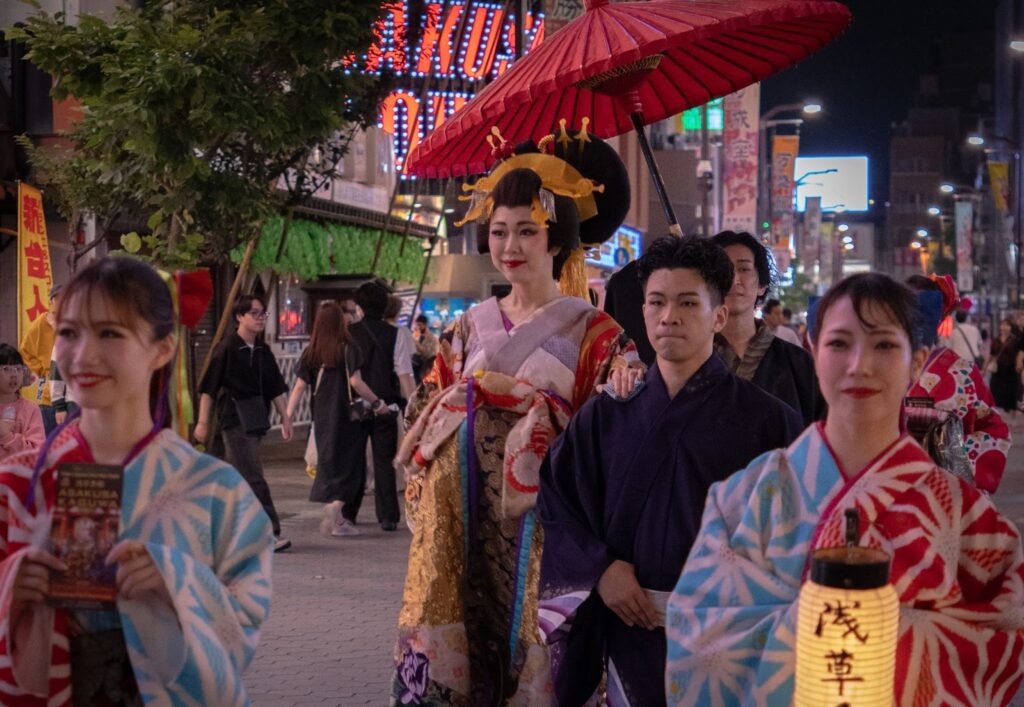
The creation of an oiran hairstyle was not a simple daily task; it was a ritual that required hours of stillness and the skill of a master stylist, known as a kamiyui. Unlike modern wigs used in theater today, historical oiran often had their natural hair styled into these gravity-defying shapes.
The Use of Bintsuke-abura
To maintain the rigid, sculptural quality of the hair, stylists used a thick, fragrant wax called bintsuke-abura. This wax was so strong that oiran could not simply wash their hair every day. Instead, they would sleep on a special wooden neck rest (takamakura) to avoid crushing their hairstyle, a testament to the physical endurance required to maintain their image.
Secrets of the Volume
To achieve the immense volume seen in styles like the Date-hyogo, stylists often used hairpieces made of horsehair or extra human hair, known as koke. These were hidden within the natural hair to provide the structural support needed to hold dozens of heavy metal pins without the style collapsing.
Beyond Edo: The Famous Yukaku Districts of Japan
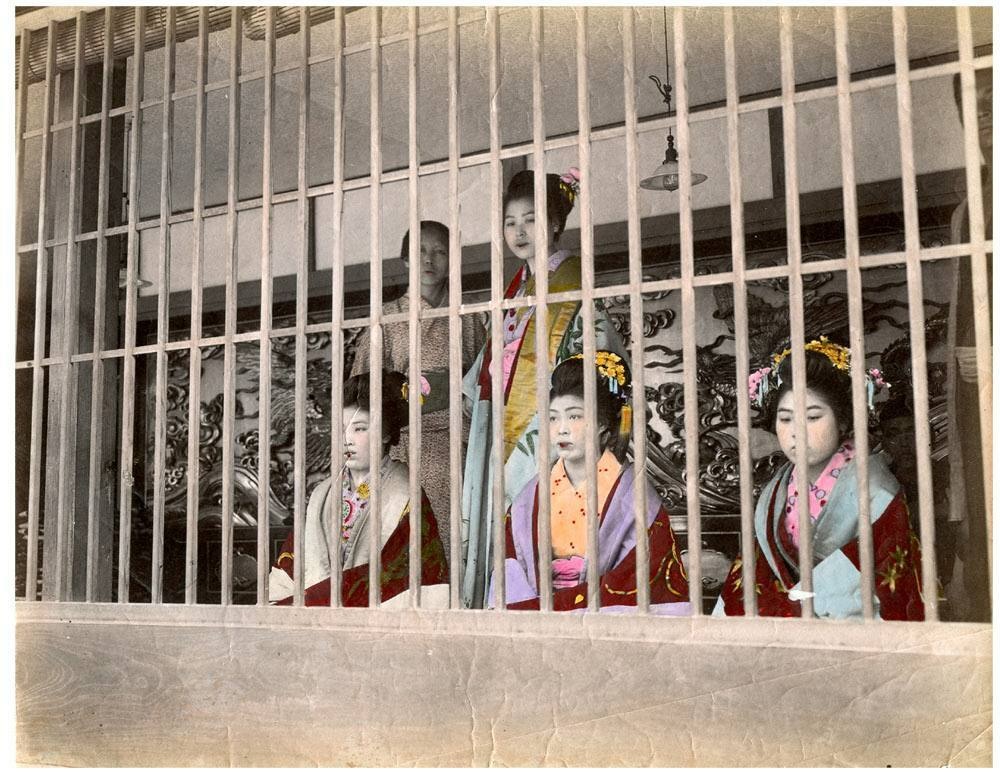
While the Yoshiwara in Tokyo is the most famous, it was not the only place where oiran culture flourished. The Tokugawa shogunate established three primary “Yukaku” (licensed pleasure districts) in major cities to regulate entertainment and social life.
- Yoshiwara (Edo/Tokyo): The largest and most influential district, setting the trends for fashion and hair nationwide.
- Shimabara (Kyoto): Known for its high level of cultural refinement. Courtesans here were often skilled in tea ceremony and classical music.
- Shinmachi (Osaka): A hub for the wealthy merchant class of Osaka, known for its vibrant and lively atmosphere.
Other notable districts included Maruyama in Nagasaki, which was unique for its interaction with Chinese and Dutch traders.
Icons of the Yoshiwara: Famous Oiran in History
The styles we admire today were defined by legendary women who were the celebrities of their time.
Takao Dayu
The name Takao was a prestigious title passed down through generations. The second-generation Takao is the most famous, remembered for her beauty and talent in poetry. She influenced the very standard of elegance in Japanese hair ornaments.
Hanaoguri
Hanaoguri was frequently depicted in ukiyo-e (woodblock prints). She was celebrated for her intellectual prowess and her ability to engage in complex conversations with the era’s elite. Her portraits provide historical evidence of the transition to the massive, multi-pinned structures of the late Edo period.
Oiran in Pop Culture: Movies, Anime, and Manga
- Demon Slayer: Kimetsu no Yaiba (Entertainment District Arc): Features the character Daki, an oiran who showcases the elaborate hair and kimono typical of the rank.
- Sakuran: A visual masterpiece directed by Mika Ninagawa, telling the story of a girl rising to become an oiran with stunningly stylized hairstyles.
- Memoirs of a Geisha: While focused on geisha, it helps audiences understand the distinct visual differences between various classes of performers.
The Weight of Beauty: Hair Accessories and Kanzashi
What truly sets the oiran hairstyle apart is the abundance of accessories. An oiran might wear up to 20 or more different pieces in her hair.
- Kanzashi: Long hairpins made of silver, gold, or tortoiseshell. Some featured dangling charms (bira-bira) that would jingle.
- Kogai: Large, sword-like rods that passed through the mage (topknot).
- Combs (Kushi): Placed at the front or sides, these were often lacquered with gold designs (maki-e).
Experience the Magic of Oiran at Asakusa Kaguwa
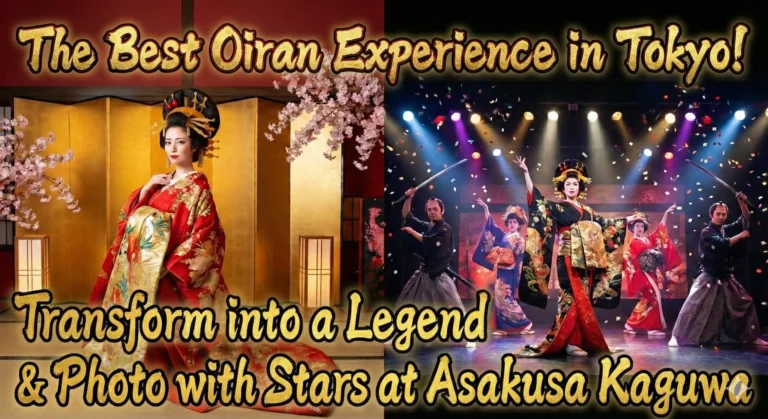
If you are visiting Tokyo and want to see the breathtaking beauty of oiran hairstyles and costumes in person, Asakusa Kaguwa is the premier destination.
Located just a 6-minute walk from Asakusa Station, Asakusa Kaguwa offers a 60-minute spectacular that brings the Edo period to life. Our professional performers take the stage as oiran, geisha, and samurai, showcasing the intricate hairstyles you have just read about.
The show is entirely non-verbal, filled with dancing, acting and visual performances, perfect for international visitors who want to experience authentic Japanese entertainment without a language barrier.
Why Visit Asakusa Kaguwa?
- Authentic Costumes: See the majestic oiran hairstyles and kimono up close.
- Neo-Japanesque Artistry: Enjoy high-energy performances based on elements of traditional Japanese dance, with a modern touch.
- Convenient Location: Located in the heart of Asakusa, near the famous Senso-ji Temple.
- Accessible to All: A cultural experience for all ages and nationalities.
- A stage production by professional performers.
- Highly polished entertainment that utilizes the skills and expressiveness of dancers and actors.
- A fusion of tradition and pop culture.
Frequently Asked Questions
Q: How heavy is an oiran’s wig?
A: A full oiran wig, complete with all accessories, can weigh between 5 to 10 kilograms.
Q: Is there a difference between oiran and geisha hairstyles?
A: Yes. Geisha hairstyles are more understated. Oiran hairstyles are much larger, wider, and far more ornate.
Q: How did they sleep with such hair?
A: They used a wooden neck pillow called a takamakura to keep their head elevated and the hair untouched by the bedding.
Summary
Oiran hairstyles are a testament to the dedication and artistry of Japanese culture. From the technical secrets of the kamiyui to modern depictions in anime, these styles remain a powerful symbol of Japan’s aesthetic heritage. While the Edo period is long gone, the spirit of the oiran continues to captivate audiences today.
Footnotes and Sources:
- Asakusa Kaguwa Official Website: https://www.asakusa-kaguwa.com/
- Wikipedia – Nihongami: https://en.wikipedia.org/wiki/Nihongami
- Wikipedia – Yoshiwara: https://en.wikipedia.org/wiki/Yoshiwara
- JAANUS – Yukaku (Pleasure Districts): https://www.aisf.or.jp/~jaanus/deta/y/yuukaku.htm
Studio Yairo – Oiran Hairstyle History: https://en.053610.net/2025/01/17/%E8%8A%B1%E9%AD%81%E5%86%99%E7%9C%9F%E3%81%AB%E3%82%88%E3%81%8F%E3%81%82%E3%82%8B%E9%AB%AA%E5%9E%8B%E3%81%A3%E3%81%A6%E3%81%A9%E3%82%93%E3%81%AA%E7%A8%AE%E9%A1%9E%E3%81%8C%E3%81%82%E3%82%8B%E3%81%AE/